Project indexBrand, browser game & event
MODUS Road
A staff polo became a playable introduction to MODUS.
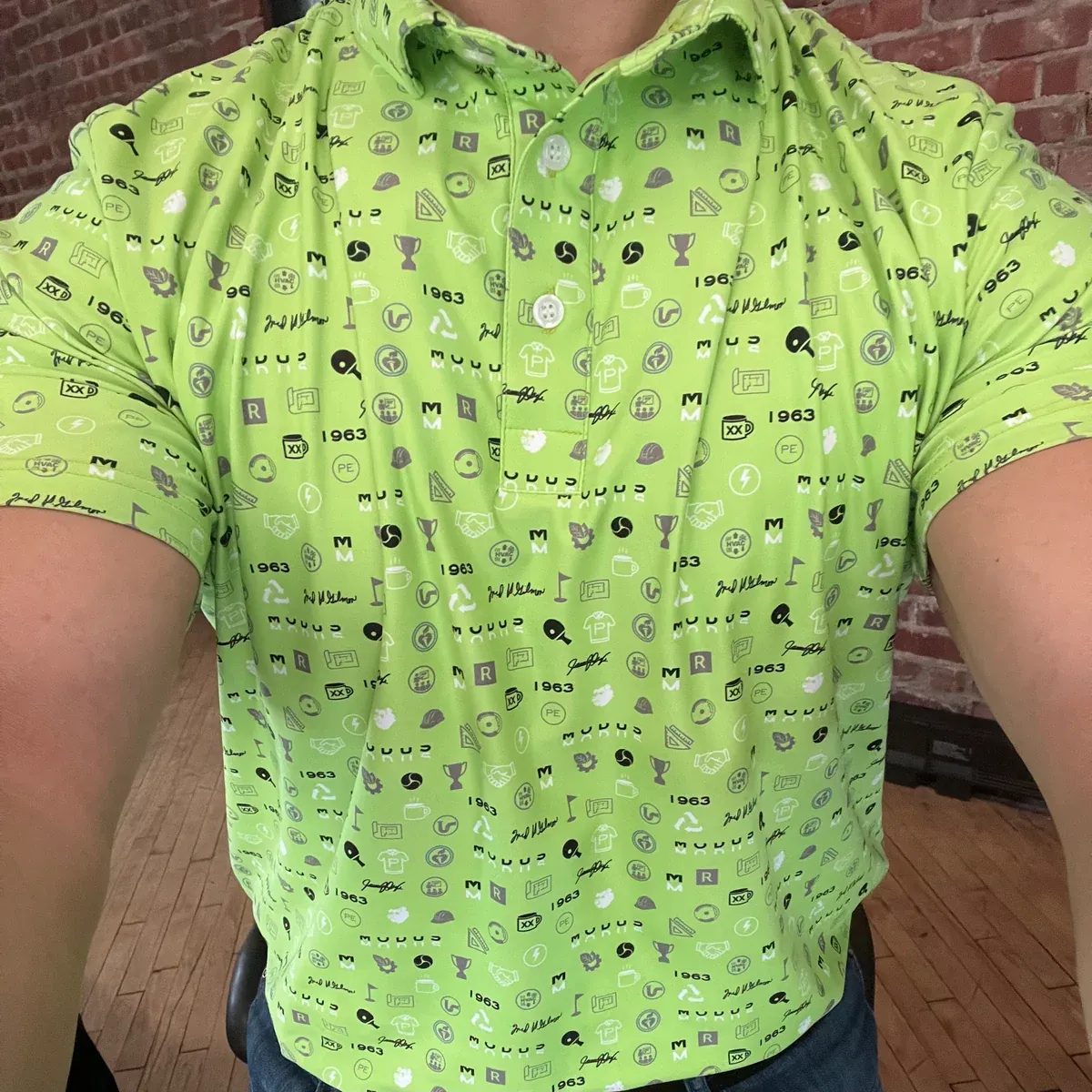
I drew a set of icons about life at our engineering firm. For AIA Iowa, I turned those illustrations into a browser game architects could play beside the people who inspired it.
Play MODUS Road- My role
- Illustration, apparel, game design, development and booth experience
- Scope
- 25 original icons · AIA Iowa, September 2026
The stories were already on the shirt
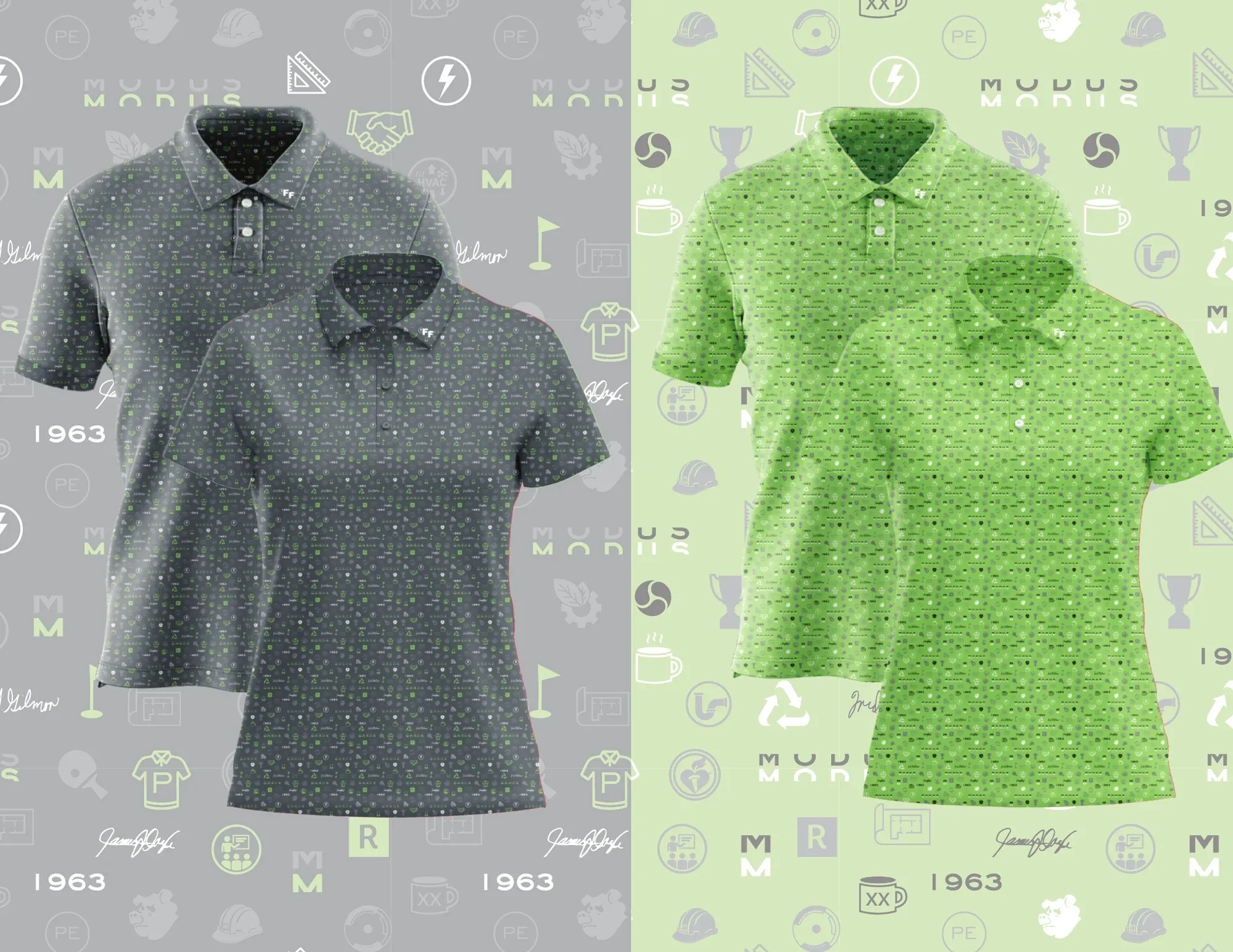
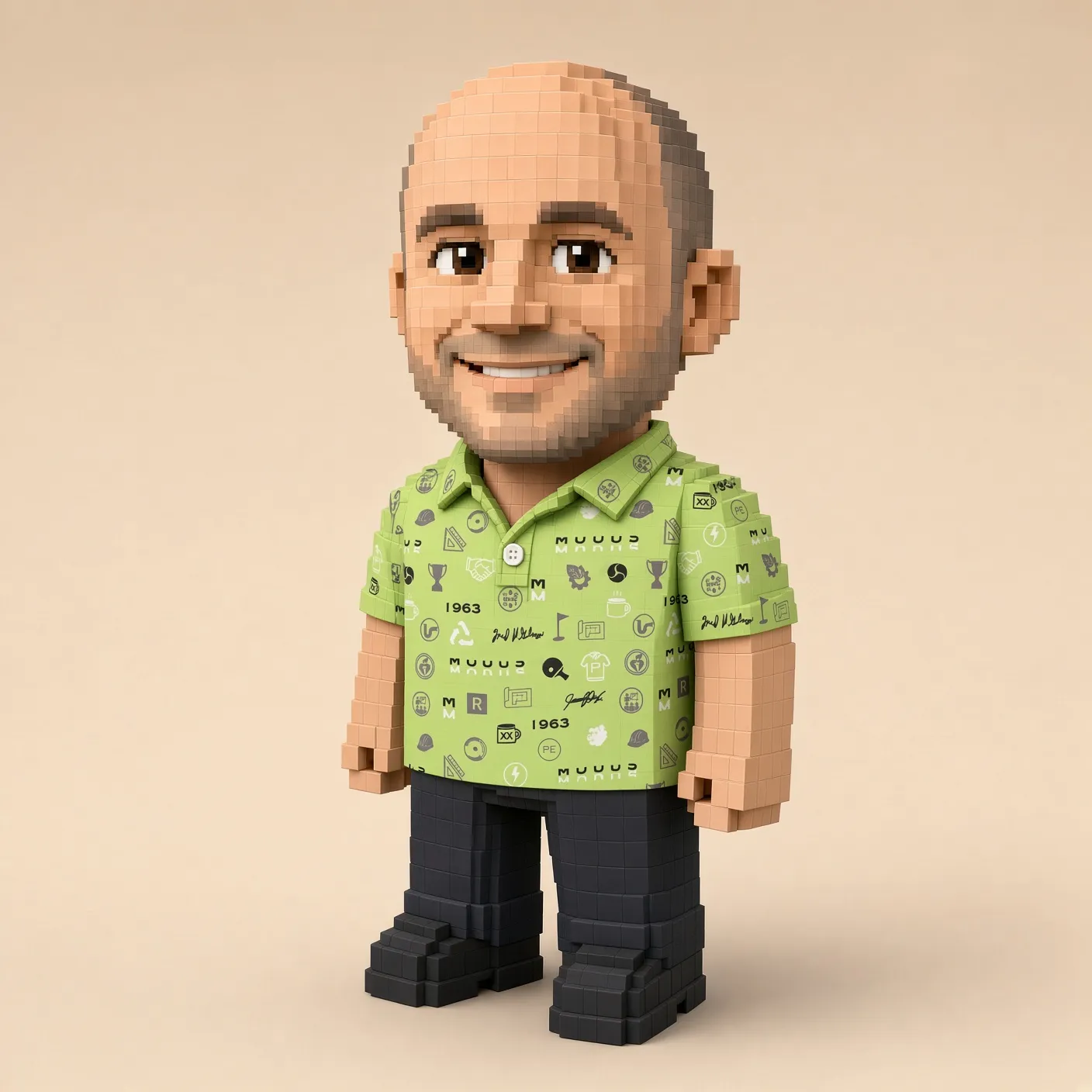
I started with things people inside MODUS would recognize. A ductulator belongs to an engineer’s working day. Ping-pong paddles recall time together. A founder’s signature and the year 1963 carry pieces of the firm’s history. I drew 25 icons and worked them into a repeat for gray and lime polos.
One detail appears only once. I tucked a portrait of Harry Doyle into the pattern to mark his retirement. You can wear the shirt for a while before spotting him. That kind of discovery gave me a starting point for the game.

Give the artwork something to do
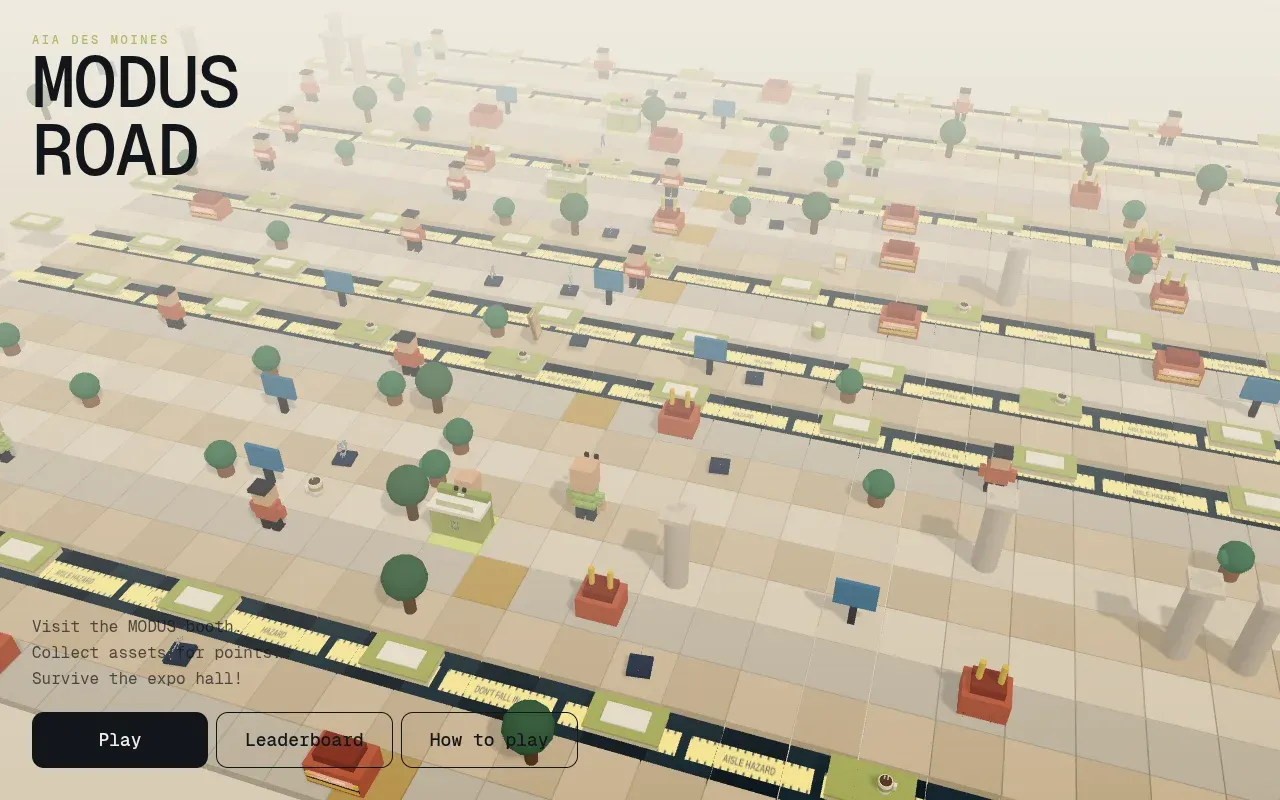
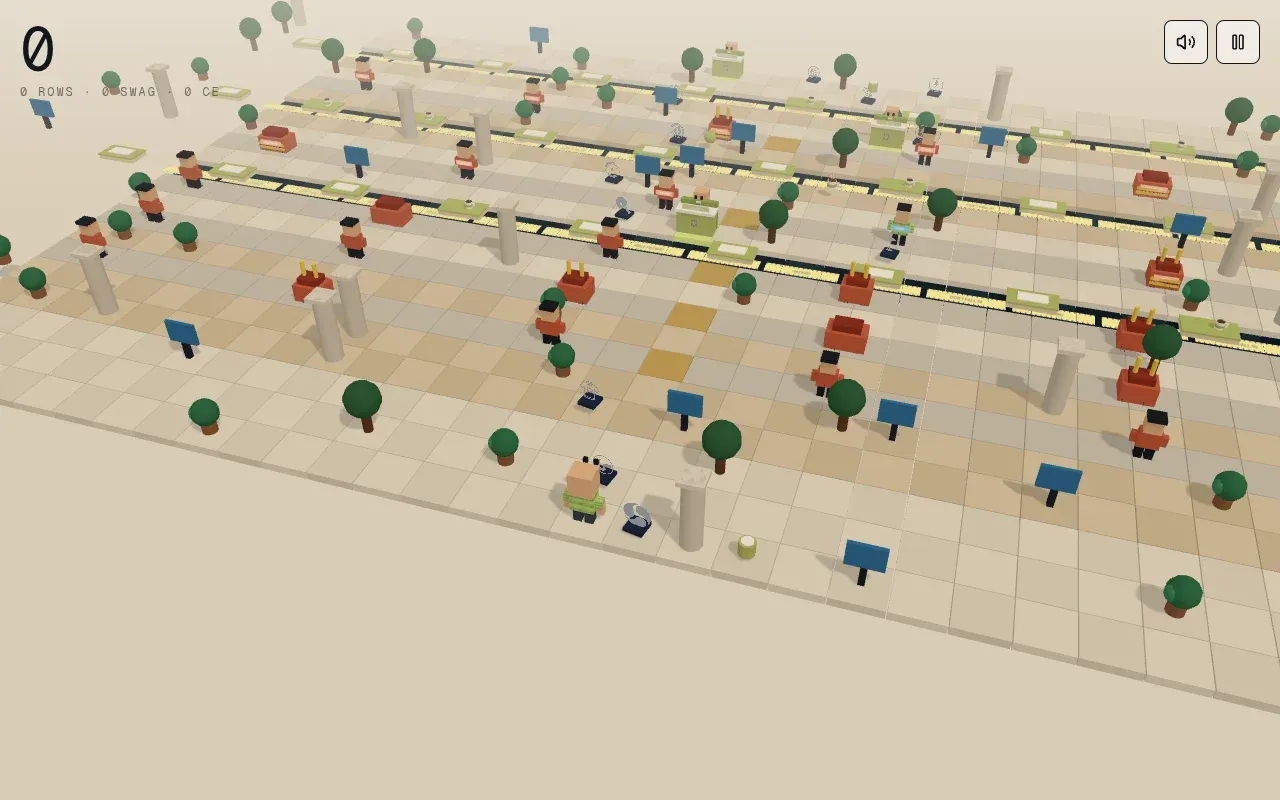
I built a 3D expo floor with booths, moving carts and flooded aisles. A player hops through the hall, picks up swag and looks for the MODUS booth. Selected icons from the polo became collectibles. Finding one reveals a short account of what it means.
I modeled playable characters on the people working the event, including myself. The same lime shirt appears on screen and on the person at the booth. I used Three.js and WebGL for the world and React for the menus, character choices and score screens. Touch and keyboard controls let the game work on a visitor’s phone or the booth display.
Design the booth as part of the game
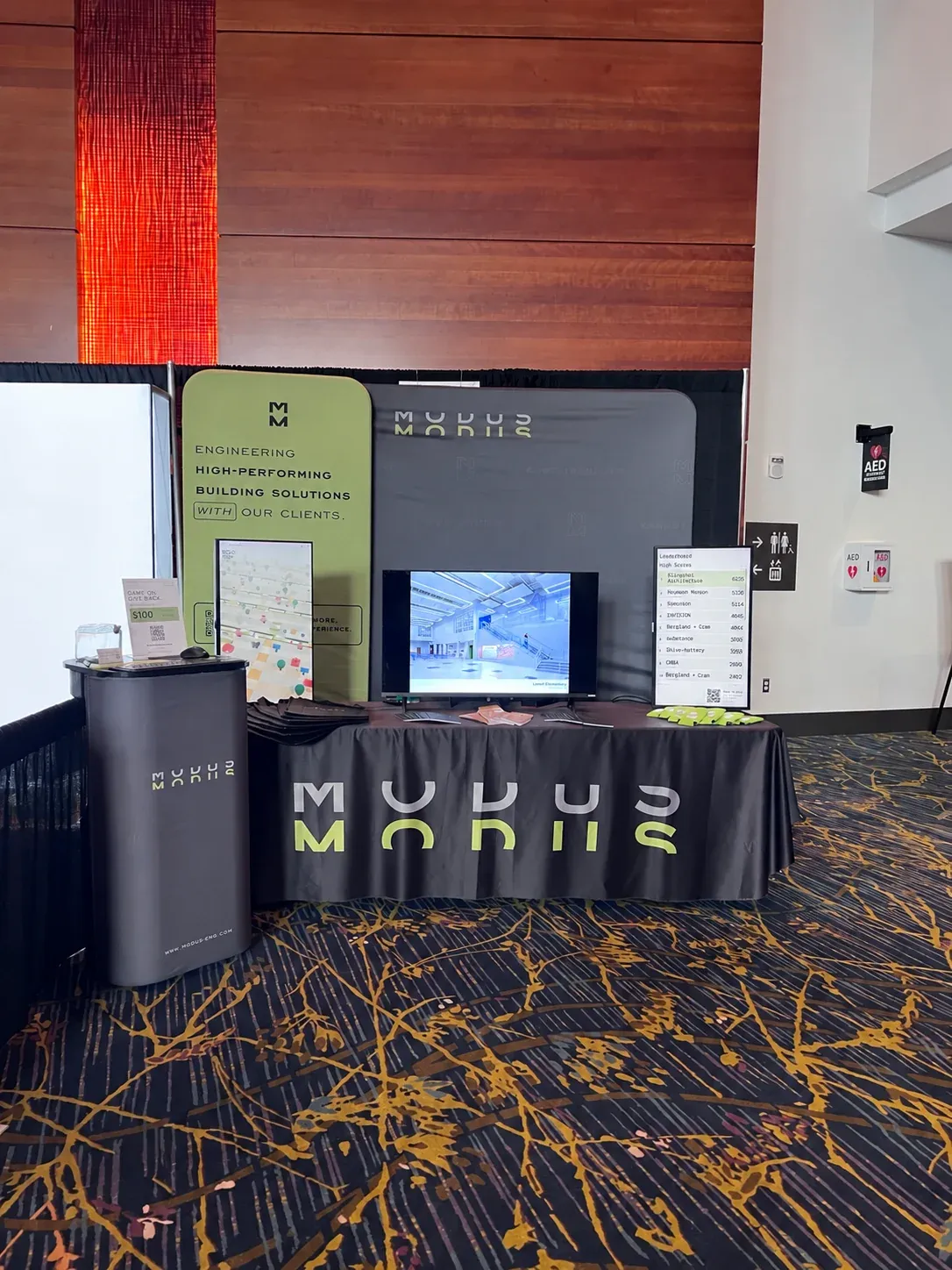
At AIA Iowa in September 2026 the portrait display ran the game. A second monitor showed the shared leaderboard, and the center screen continued to show our engineering projects. Someone could understand the activity from the aisle, scan the QR code and play on their own phone.
The live standings belonged to the event. The browser game can still be played, with high scores saved locally. The same work now exists as something the staff can wear, a game a visitor can try and a public account of how the two came together.